
Lipocartilage breakthrough advances cartilage repair, tissue engineering
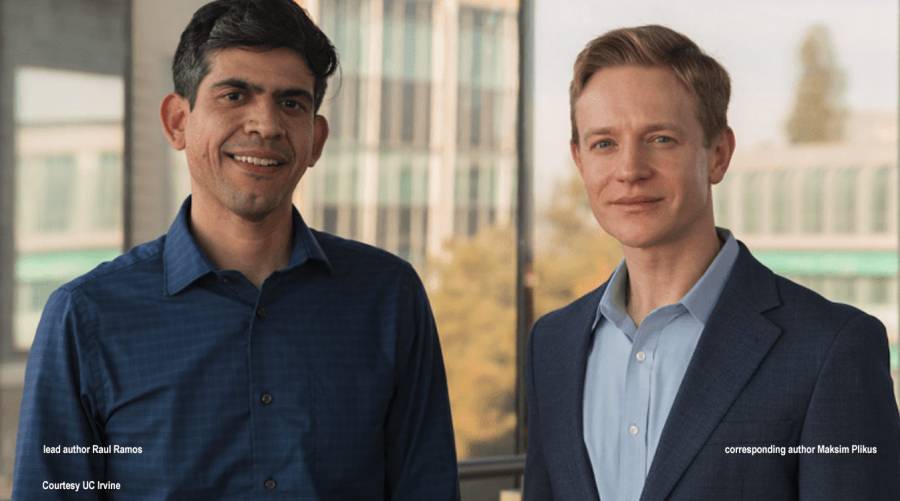
IRVINE, CALIFORNIA: In a groundbreaking advancement for regenerative medicine and tissue engineering, a research team led by the University of California, Irvine has identified a novel skeletal tissue with remarkable properties. Dubbed “lipocartilage”, this newly characterized tissue holds the potential to revolutionize treatments for cartilage-related defects and injuries.

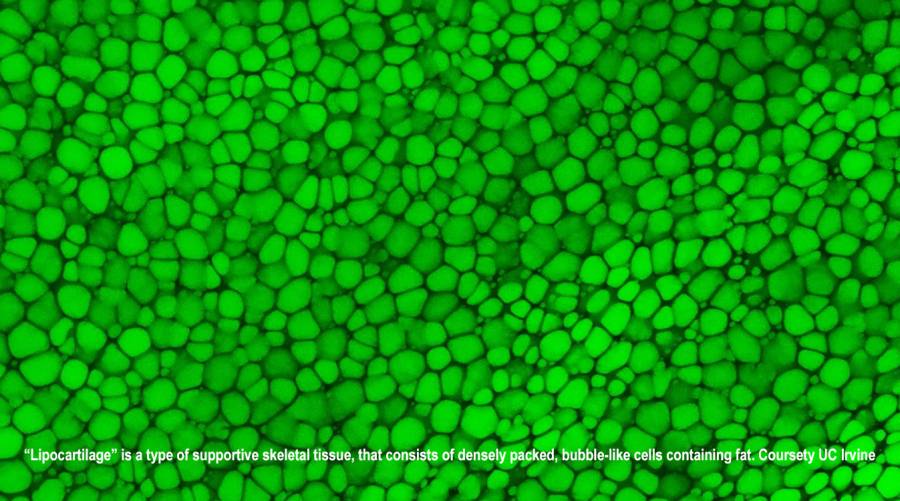
Unlike traditional cartilage, which depends on an external extracellular matrix for support, lipocartilage contains specialized fat-filled cells known as “lipochondrocytes” that provide internal strength while maintaining a soft, elastic structure. Researchers liken its resilience to that of bubble-wrap packaging, combining durability and flexibility. Lipocartilage is naturally found in the ears, nose, and throat of mammals, where flexibility is essential.
“Lipocartilage’s resilience and stability provide a compliant, elastic quality that’s perfect for flexible body parts such as earlobes or the tip of the nose, opening exciting possibilities in regenerative medicine,” said Maksim Plikus, corresponding author and professor of developmental and cell biology at UC Irvine. “Instead of harvesting rib cartilage in painful, invasive procedures, future methods could use stem cells to derive patient-specific lipochondrocytes. These could be 3D-printed into custom shapes for treating birth defects, trauma, and other cartilage diseases.”
The discovery, detailed in the journal Science, is built on a historic observation. Dr. Franz Leydig, in 1854, first noted fat droplets in rat ear cartilage but lacked the tools to explore further. Now, with advanced imaging and biochemical methods, the UC Irvine team has decoded lipocartilage’s molecular structure, metabolism, and genetic mechanisms. They found that lipocartilage resists shrinkage or expansion, unlike typical fat cells, due to suppressed fat-degrading enzymes. Removing its lipid reserves renders the tissue brittle, underscoring the critical role of lipochondrocytes.
Lead author Raul Ramos, a postdoctoral researcher in Plikus’ laboratory, highlighted the broad implications: “Our findings challenge traditional biomechanics, showing how lipids stabilize tissue and suggesting countless research opportunities in aging, cellular stability, and tissue engineering.”
In some mammals, such as bats, lipochondrocytes form intricate patterns in large ears, potentially enhancing hearing by modulating sound waves. This expands potential uses of lipocartilage in bioengineering applications beyond human health.
The diverse research team included experts from the U.S., Australia, Denmark, Germany, Japan, South Korea, and other nations, collaborating with the Serrano Animal & Bird Hospital and Santa Ana Zoo.
By challenging long-held beliefs and unlocking the unique properties of fat-filled cells, the discovery of lipocartilage marks a transformative step forward in regenerative medicine. As technology converges with biology, tailored treatments for cartilage repair may soon become reality, improving lives and expanding horizons for future research.
Stay updated on the latest research and innovations in medical field. Like and subscribe to Medical News on Facebook and Instagram for more insights and updates.

Advertisement
E-PAPER
Trending
Popular
Pakistan’s Dr. Misha Tanveer takes air pollution research to Europe ...
-
Calorie deficit for weight loss: How to ...
06:00 PM, 24 Aug, 2026 -
Vaccine maker warns of wider TBE, ...
05:00 PM, 21 Aug, 2026 -
FDA authorizes first robot to draw ...
06:11 PM, 20 Aug, 2026 -
One blood test for multiple cancers ...
04:52 PM, 11 Aug, 2026
Follow us on Facebook
Follow us on Twitter
Copyright ©2026 Medical News. All Rights Reserved.