
Pakistan’s anti-polio drive begins under fire as cop martyred protecting vaccinators in Hangu
As 45 million children are targeted in the nationwide April 13–19 campaign, the deadly attack in Hangu’s Thall tehsil underscores the high stakes of Pakistan’s final push against a crippling disease
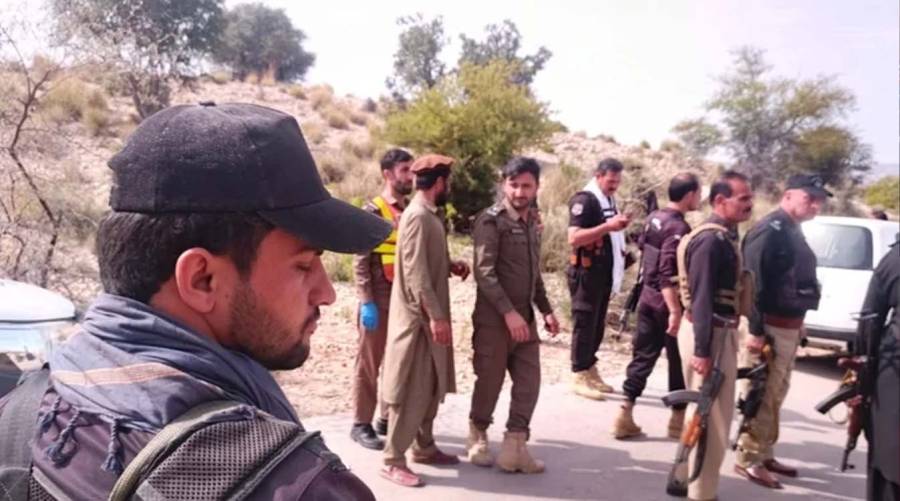
ISLAMABAD / HANGU / KARACHI: Pakistan’s decisive new push to eradicate polio began Monday with a grim reminder of the danger faced by frontline teams: a police constable was martyred and four others were injured in Hangu district’s Thall tehsil when armed assailants opened fire on a security party heading to protect vaccinators in Chapri Waziran, turning the first day of the national campaign into both a public health mission and a national security story.
The slain constable was identified as Israr-ul-Haq, who hailed from Shangla, while the injured personnel were shifted to a local hospital. Police launched an immediate search operation across the area, even as authorities stressed that the anti-polio campaign in Hangu would continue uninterrupted.
The attack comes as Pakistan launches its second nationwide anti-polio campaign of 2026, running from April 13 to April 19, with one of the most ambitious child health targets in the country’s recent public health history.
More than 45 million children under the age of five are set to receive life-saving oral polio vaccine drops across all provinces and regions, while children will also be given Vitamin A supplementation to strengthen immunity and support healthy growth.
More than 400,000 frontline workers have been mobilised for the week-long door-to-door drive, covering major urban centres, peri-urban settlements, and some of the country’s hardest-to-reach remote communities.
The National Emergency Operations Centre said province-wise targets include:
- Punjab: over 23 million children
- Sindh: over 10.6 million
- Khyber Pakhtunkhwa: over 7.2 million
- Balochistan: over 2.6 million
- Islamabad: over 460,000
- Gilgit-Baltistan: over 228,000
- Azad Jammu and Kashmir: over 760,000
This scale reflects how critical this round has become in Pakistan’s final-mile battle against a disease that remains incurable and can leave children permanently disabled.
First Lady Aseefa Bhutto Zardari urged families across Pakistan to fully cooperate with vaccination teams, calling the April campaign a defining phase in the country’s eradication journey.
She said Pakistan stands at a critical juncture, with years of sustained progress bringing the country closer to elimination.
In 2025, 31 polio cases were reported nationwide, while in 2026 only one case has been recorded so far, a measurable improvement that health authorities believe must now be converted into complete interruption of transmission.
She emphasised that as long as the virus exists anywhere, it remains a threat everywhere, especially with cross-border movement, which is why the campaign is also being coordinated with Afghanistan.
Her message was direct: every family must open its doors to vaccinators, every child must receive drops in every round, and no child can be left behind.
Sindh's improving environmental surveillance
In Karachi, Sindh Chief Minister Murad Ali Shah formally inaugurated the provincial campaign at Government Boys Secondary School, Khayaban-e-Shujaat, Defence, where he personally administered polio drops to children in classrooms.
The ceremony was attended by Education Minister Syed Sardar Shah, Karachi Mayor Murtaza Wahab, Commissioner Karachi Hassan Naqvi, Health Secretary Tahir Sangi, and provincial polio chief Shahryar Gul.
Murad Ali Shah said that last year 80 per cent of environmental samples in Sindh showed poliovirus presence, but the latest survey has reduced that figure to 24 per cent, a significant indicator that intensified campaigns are beginning to yield results.
Why the Hangu attack changes the story
The Hangu attack has once again highlighted the extraordinary risks faced by Pakistan’s vaccinators and the police officers who shield them.
Every national campaign is ultimately a race against two threats: the virus itself and the fear created by violence.
That is why the martyrdom of Constable Israr-ul-Haq is not merely a law-and-order incident — it represents the cost Pakistan continues to pay in its pursuit of protecting children from lifelong paralysis.
Yet officials insist the campaign will continue.
And perhaps that is the defining national message of this week: terror cannot be allowed to vaccinate fear faster than the state vaccinates children.
For Pakistan, the success of this April 13–19 campaign may well determine how close the country truly is to ending one of its longest-running public health battles.
Stay informed, stay protected
CLICK HERE TO JOIN Medical News Pakistan on WhatsApp for real-time health alerts, expert insights, and breakthrough medical discoveries.

Advertisement
E-PAPER
Trending
Popular
Pakistan’s Dr. Misha Tanveer takes air pollution research to Europe ...
-
Calorie deficit for weight loss: How to ...
06:00 PM, 24 Aug, 2026 -
Vaccine maker warns of wider TBE, ...
05:00 PM, 21 Aug, 2026 -
FDA authorizes first robot to draw ...
06:11 PM, 20 Aug, 2026 -
One blood test for multiple cancers ...
04:52 PM, 11 Aug, 2026
Follow us on Facebook
Follow us on Twitter
Copyright ©2026 Medical News. All Rights Reserved.