
Two-step test predicts frailty, mobility decline and lifespan risk
Simple walking test developed in Japan is emerging as a powerful indicator of muscle strength, fall risk, and healthy ageing worldwide
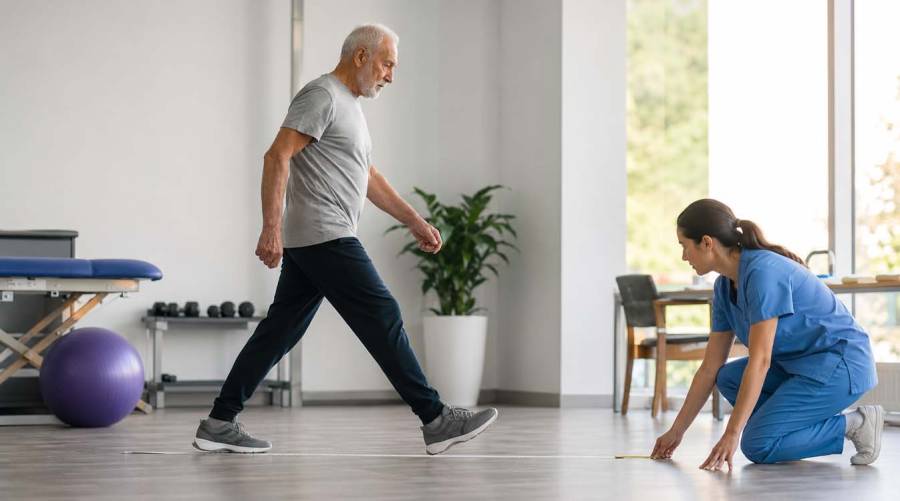
In the evolving field of geriatric medicine, a simple physical assessment known as the two-step test is gaining global attention for its ability to predict frailty, mobility decline, and long-term independence in older adults.
Often summarized by the striking phrase, “Two steps determine the rest of your life,” the test highlights how a basic measure of walking ability can reflect deeper biological ageing processes.
A simple test with powerful predictive value
The two-step test originated in Japan’s orthopedic and rehabilitation medicine community as a practical way to evaluate lower-body function without specialized equipment.
It measures the maximum distance covered in two consecutive strides and divides that value by the individual’s height in centimeters. The resulting ratio provides a standardized indicator of mobility performance.
Because of its simplicity, the test has been widely adopted in community health programs across Japan and other ageing populations.
What the test reveals about the body
Experts explain that the two-step test is far more than a walking assessment—it reflects a complex interaction of muscle strength, joint flexibility, balance, and neurological coordination.
Strong performance requires:
• Adequate quadriceps and gluteal muscle strength
• Stable balance during weight transfer
• Healthy hip and knee joint mobility
• Proper coordination between the brain and peripheral nerves
According to clinicians, stride length effectively serves as a “functional summary” of lower-body health.
Interpreting results
Standard clinical interpretations of the two-step test include:
• 1.3 or higher: Normal mobility function
• 1.1 to 1.3: Early decline in motor function
• Below 1.1: Significant mobility impairment and increased frailty risk
Lower scores are associated with higher risks of falls, reduced independence, and potential need for long-term care.
Conditions linked to low scores
Medical experts associate reduced two-step performance with several conditions, including:
• Sarcopenia: Age-related loss of muscle mass and strength
• Osteoarthritis: Pain-induced reduction in stride length
• Parkinson’s disease: Neurological gait disturbances
• Peripheral neuropathy: Reduced sensory and motor control
• Sedentary lifestyle: Progressive loss of strength and balance
Psychological fear following previous falls can also lead individuals to subconsciously shorten their stride.
Why the test matters for ageing societies
The two-step test is increasingly valued because it detects early functional decline before more severe disability appears.
Compared to traditional gait speed assessments, it is considered more sensitive in identifying early frailty, making it useful for preventive healthcare strategies.
Exercise and prevention strategies
To improve performance, specialists recommend targeted interventions:
• Chair squats to strengthen lower-body muscles
• Single-leg balance exercises for stability
• Gradually increasing stride length during daily walking
• Resistance and mobility training for hip and knee joints
These interventions can help maintain independence and reduce fall risk in older adults.
Expert insight from Japan
Kim Heon-kyung, Adjunct Professor at the CHA University Graduate School of Integrative Medicine and former head of the Tokyo Metropolitan Geriatric Hospital and Institute of Longevity, highlights the public health value of the test.
He notes that in Japan, communities use the two-step test to identify individuals at risk of frailty and guide early intervention strategies.
He further emphasizes that exercise alone is not sufficient. Nutritional support—especially protein intake, vitamin D supplementation—along with sleep quality improvement and chronic disease management (such as diabetes and hypertension) are essential components of healthy ageing.
A growing global health tool
As populations continue to age worldwide, the two-step test is emerging as a practical, low-cost screening tool for assessing functional health.
Its growing adoption reflects a broader shift in modern medicine—from treating disease to predicting and preventing functional decline before it becomes irreversible.
Stay informed, stay alert
CLICK HERE TO JOIN Medical News Pakistan on WhatsApp for real-time health alerts, expert insights, and breakthrough medical discoveries.

Advertisement
E-PAPER
Trending
Popular
Pakistan’s Dr. Misha Tanveer takes air pollution research to Europe ...
-
Calorie deficit for weight loss: How to ...
06:00 PM, 24 Aug, 2026 -
Vaccine maker warns of wider TBE, ...
05:00 PM, 21 Aug, 2026 -
FDA authorizes first robot to draw ...
06:11 PM, 20 Aug, 2026 -
One blood test for multiple cancers ...
04:52 PM, 11 Aug, 2026
Follow us on Facebook
Follow us on Twitter
Copyright ©2026 Medical News. All Rights Reserved.