
Extreme heat can turn deadly fast - Here's how to stay safe
As temperatures rise across Pakistan, doctors urge people to stay hydrated, avoid peak sun hours, protect vulnerable family members, and recognise early warning signs of heat exhaustion, heat cramps and life-threatening heatstroke.
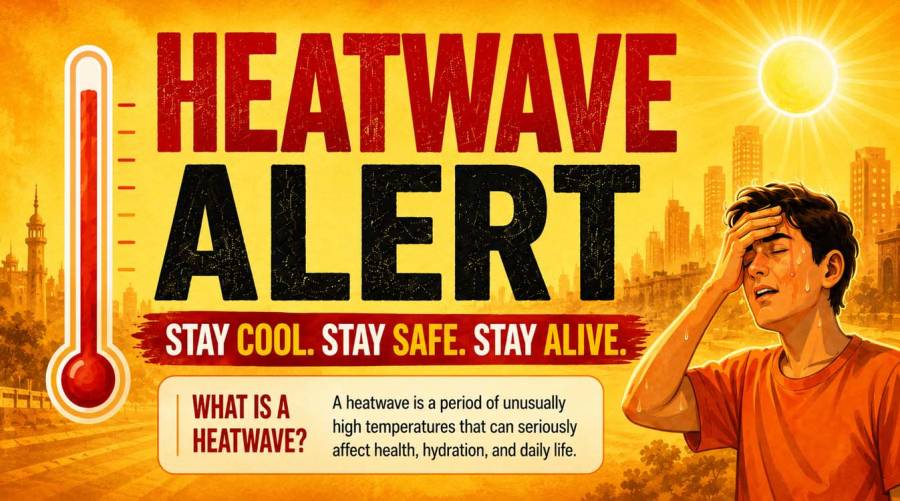
Extreme heat is not just uncomfortable — it can quickly become dangerous. During a heatwave, the body struggles to cool itself, especially when temperatures remain high for several hours or continue over consecutive days. This can lead to dehydration, heat exhaustion, painful heat cramps, and in severe cases, heatstroke, which is a medical emergency.
A heatwave is generally understood as a period of unusually high temperatures that can seriously affect health, hydration, daily routines, outdoor work, travel, and household safety. In cities, the risk can become even greater because concrete surfaces, traffic, limited shade, power interruptions, and crowded living conditions can intensify heat exposure.
For families, students, outdoor workers, elderly people, children, pregnant women, and people with chronic illnesses, the message is clear: act early, stay cool, and do not wait for symptoms to become serious.
Stay cool before the body overheats
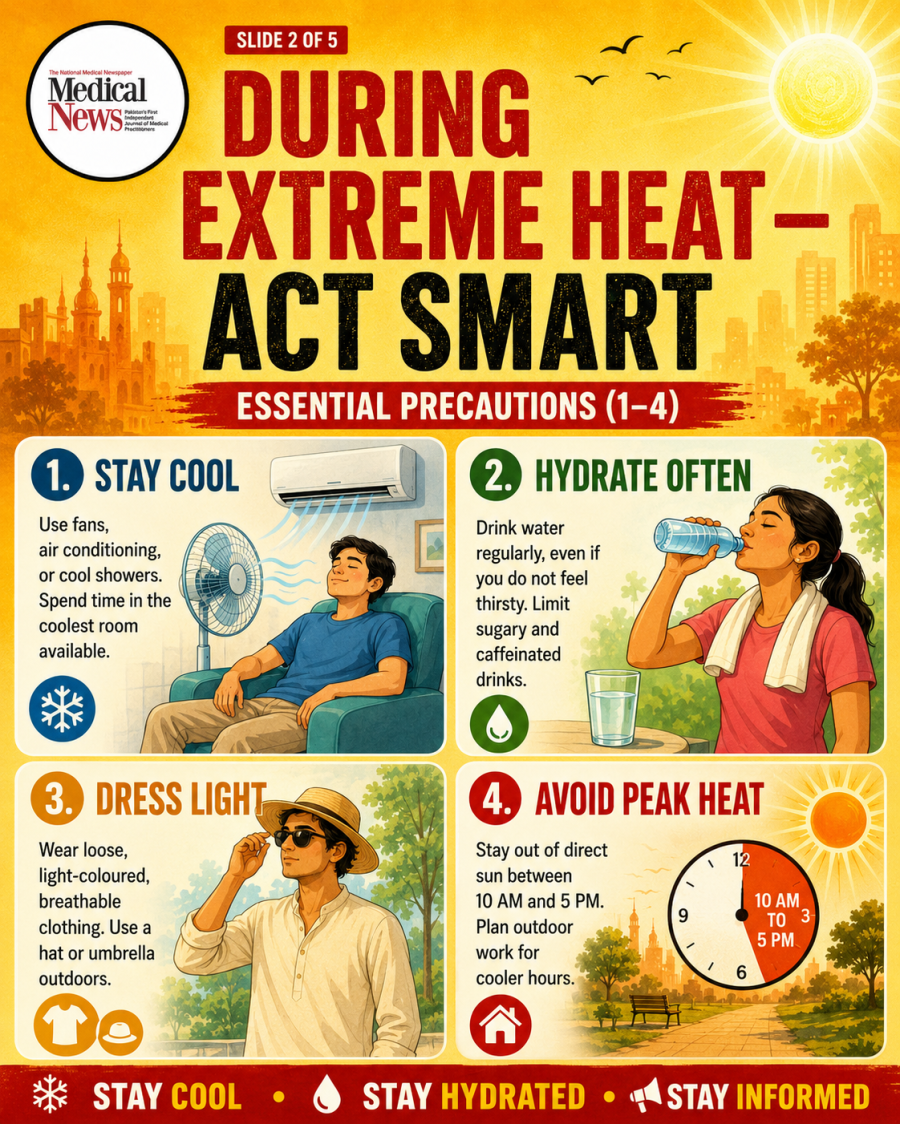
The first step during extreme heat is to reduce heat exposure. People should use fans, air conditioning, cool showers, shaded rooms, or well-ventilated indoor spaces whenever possible. Even short breaks in a cooler environment can help the body recover from heat stress.
Loose, light-coloured and breathable clothing can also reduce heat burden. Cotton clothing, wide-brimmed hats, umbrellas, sunglasses, and covered footwear can help when outdoor movement is unavoidable.
Homes should be kept as cool as possible by closing curtains or blinds during peak sunlight and improving airflow where safe. People living in poorly ventilated rooms should try to spend part of the day in a cooler area, community space, workplace, mosque, clinic, or a shaded location.
Hydration should not wait for thirst
One of the most important heatwave safety rules is simple: drink water regularly, even before feeling thirsty. Thirst is often a late sign that the body is already moving toward dehydration.
During hot weather, people should sip water throughout the day and increase fluid intake if they are sweating, walking outdoors, working in the sun, or caring for children and older adults. Sugary drinks, excessive tea, coffee, energy drinks, and caffeinated beverages should be limited, as they may worsen dehydration in some people.
Oral rehydration solution may be helpful when sweating is heavy, after prolonged outdoor exposure, or when there are signs of fluid loss. However, people with kidney disease, heart failure, fluid restrictions, or complex medical conditions should follow medical advice about fluid intake.
Avoid peak heat hours
Direct sun exposure is most dangerous during the hottest part of the day. As a general rule, people should avoid unnecessary outdoor activity between 10 AM and 5 PM, particularly during official heatwave alerts.
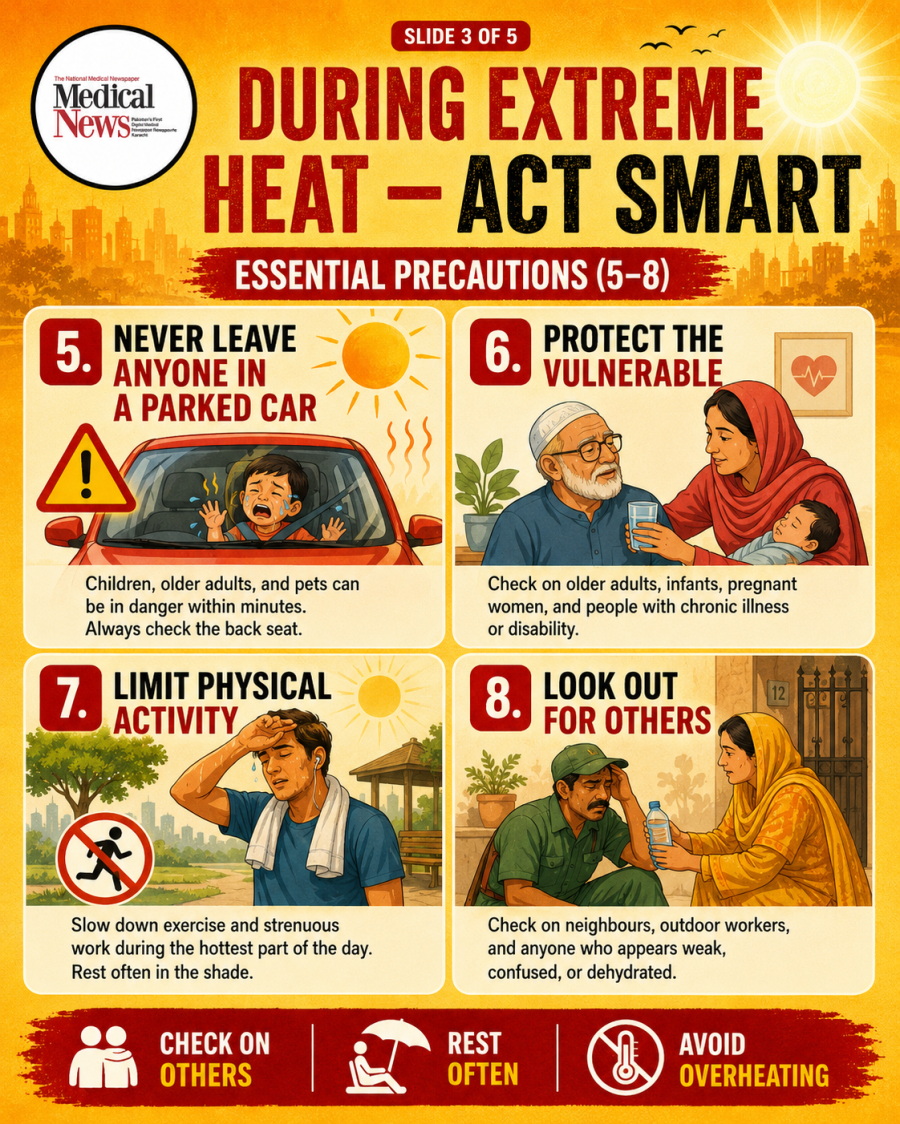
Outdoor workers, delivery riders, traffic staff, construction workers, market vendors, sanitation workers, and security staff should take frequent shade breaks, rotate duties where possible, and avoid heavy exertion during peak heat. Employers should provide drinking water, shaded rest areas, and flexible work timing during extreme heat.
Exercise should also be adjusted. Running, sports, heavy gym sessions, and strenuous outdoor activity should be moved to early morning or evening hours. If dizziness, weakness, nausea, headache, confusion, or excessive fatigue appears, activity should stop immediately.
Never leave children, older adults or pets inside parked cars
A parked car can become deadly within minutes, even if the windows are slightly open. Children, elderly passengers, people with disabilities, and pets should never be left inside a vehicle during hot weather — not even briefly.
Before locking a car, caregivers should always check the back seat. This simple habit can prevent fatal heat exposure, especially during rushed school runs, hospital visits, shopping trips, or travel.
Protect the vulnerable
Heatwaves do not affect everyone equally. Some people are at much higher risk, including infants, young children, elderly people, pregnant women, people with diabetes, heart disease, kidney disease, respiratory illness, neurological conditions, disability, fever, dehydration, or limited mobility.
People taking certain medicines may also be more vulnerable to heat-related illness. Families should check on vulnerable relatives, neighbours, domestic workers, security guards, and anyone living alone during severe heat.
Caregivers should look for early signs such as unusual tiredness, reduced urination, dry mouth, irritability, heavy sweating, headache, dizziness, nausea, confusion, or fainting.
Know the warning signs
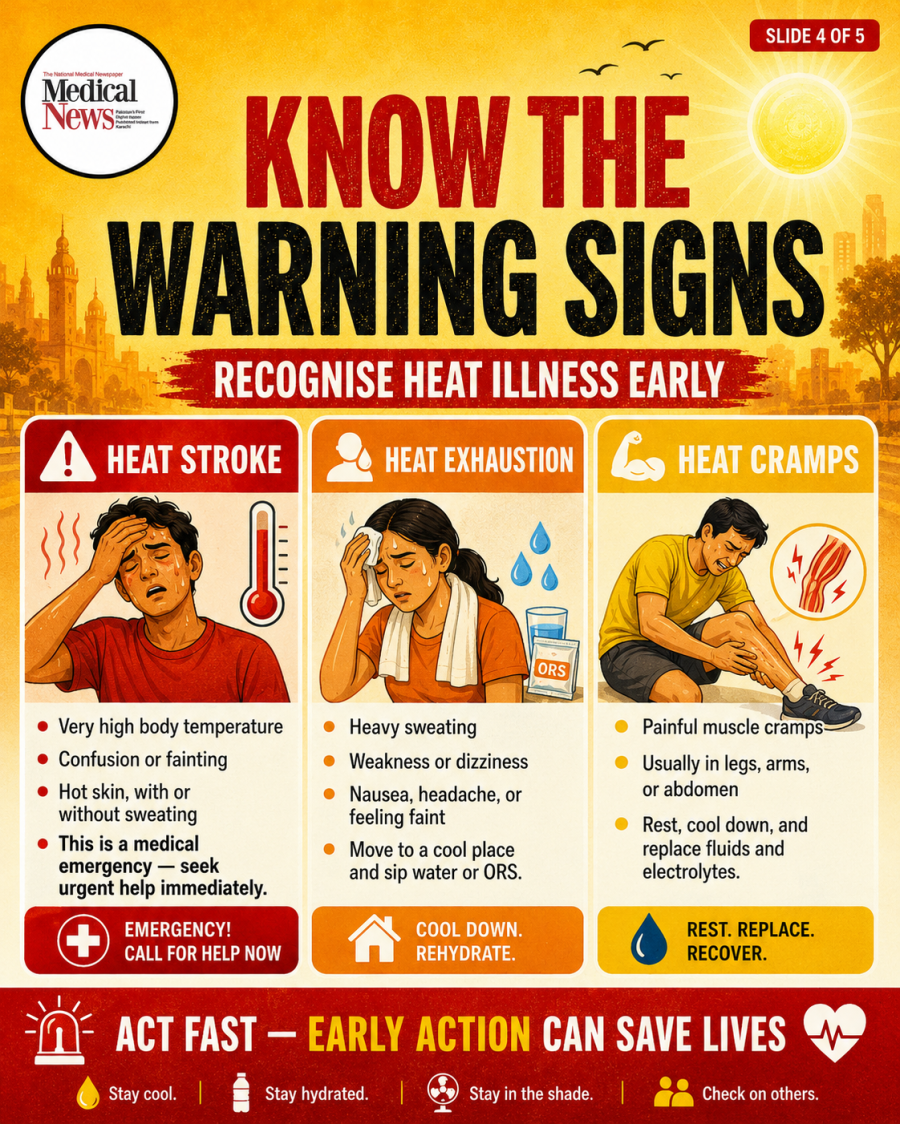
Heat-related illness can progress quickly. The three common warning categories are heat cramps, heat exhaustion, and heatstroke.
Heat cramps usually cause painful muscle spasms, commonly in the legs, arms, or abdomen. They often occur after sweating heavily or physical activity in hot weather. The person should rest, move to a cool place, drink water or oral rehydration solution, and avoid returning to strenuous activity too soon.
Heat exhaustion is more serious. Warning signs can include heavy sweating, weakness, dizziness, headache, nausea, muscle cramps, thirst, irritability, and feeling faint. The person should be moved immediately to shade or a cooler place. Tight clothing should be loosened, cool cloths may be applied, and small sips of water or ORS may be given if the person is conscious and able to drink.
Heatstroke is a medical emergency. It may involve very high body temperature, confusion, fainting, loss of consciousness, seizures, hot skin, or a person who stops sweating despite severe heat. Emergency medical help should be sought immediately. While waiting for help, the person should be moved to a cooler place and cooled rapidly with wet cloths, fans, cool water, or ice packs placed around the neck, armpits, and groin.
Check on others — heat safety is a community responsibility
During extreme heat, small acts can save lives. People should check on elderly neighbours, relatives living alone, outdoor workers, children, and those with chronic illnesses. Offering water, helping someone move into shade, or recognising confusion and weakness early can prevent serious illness.
Schools, hospitals, offices, transport services, markets, and public institutions should also take heat alerts seriously. Public messages, shaded waiting areas, drinking water points, adjusted timings, and rapid first-aid response can reduce avoidable harm.
Simple life-saving tips
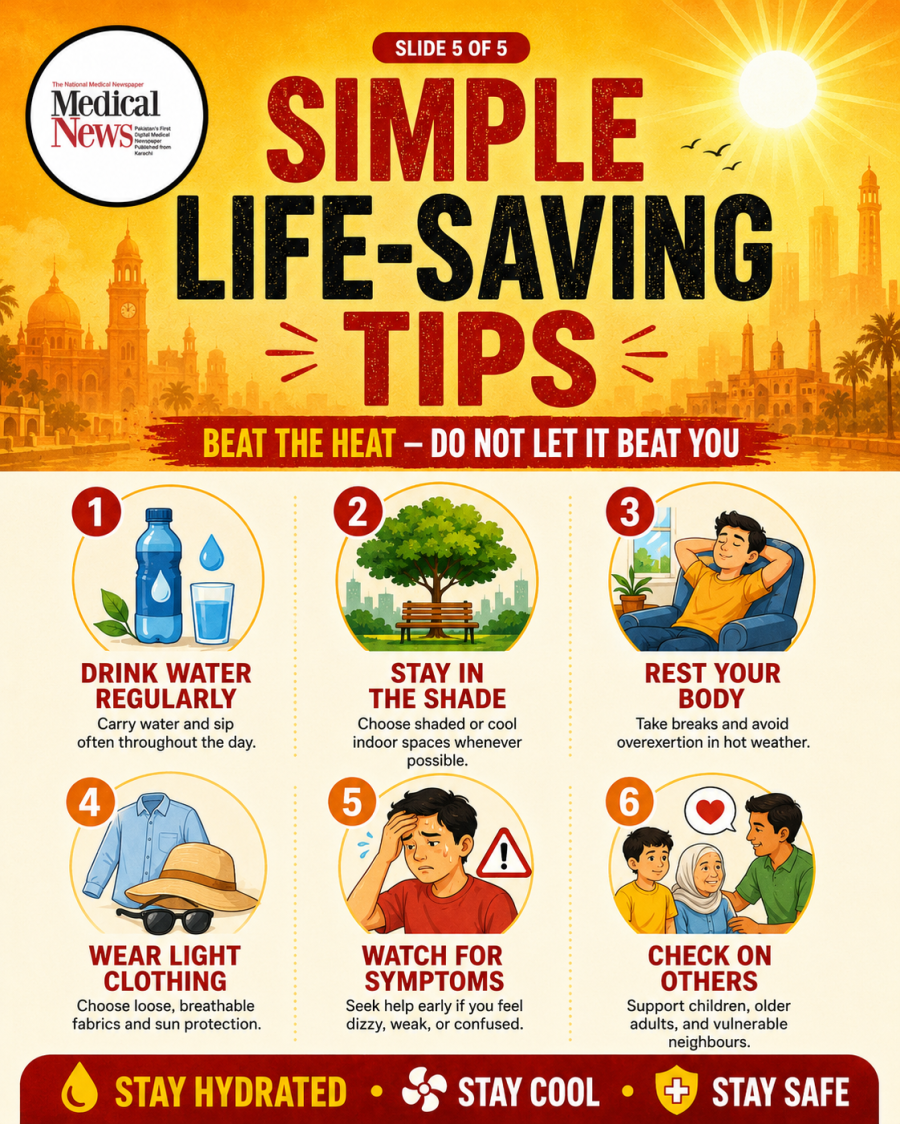
- Drink water regularly throughout the day.
- Stay indoors or in shaded areas during peak heat.
- Wear loose, light-coloured and breathable clothing.
- Avoid strenuous activity during the hottest hours.
- Use fans, cool showers, wet cloths, or air conditioning where available.
- Check on children, elderly people, pregnant women, outdoor workers, and people with chronic diseases.
- Never leave anyone in a parked car.
Seek urgent help if there is confusion, fainting, collapse, very high body temperature, or symptoms that worsen despite cooling.
Heatwaves are becoming a serious public-health challenge, but many heat-related illnesses can be prevented with early action. The best protection is to stay hydrated, stay cool, avoid unnecessary sun exposure, and recognise warning signs before they become life-threatening.
Stay informed, stay alert
CLICK HERE TO JOIN Medical News Pakistan on WhatsApp for real-time health alerts, expert insights, and breakthrough medical discoveries.

Advertisement
E-PAPER
Trending
Popular
Pakistan’s Dr. Misha Tanveer takes air pollution research to Europe ...
-
Calorie deficit for weight loss: How to ...
06:00 PM, 24 Aug, 2026 -
Vaccine maker warns of wider TBE, ...
05:00 PM, 21 Aug, 2026 -
FDA authorizes first robot to draw ...
06:11 PM, 20 Aug, 2026 -
One blood test for multiple cancers ...
04:52 PM, 11 Aug, 2026
Follow us on Facebook
Follow us on Twitter
Copyright ©2026 Medical News. All Rights Reserved.