World Population Day 2026: Why the world's population challenge is no longer just about numbers
Observed under the theme "Realizing the hopes and aspirations of young people – today and for the future," World Population Day 2026 highlights the urgent need to invest in youth, reproductive health, gender equality and sustainable development, while President Asif Ali Zardari says Pakistan's young population can become the country's greatest national asset through education, healthcare and opportunity.
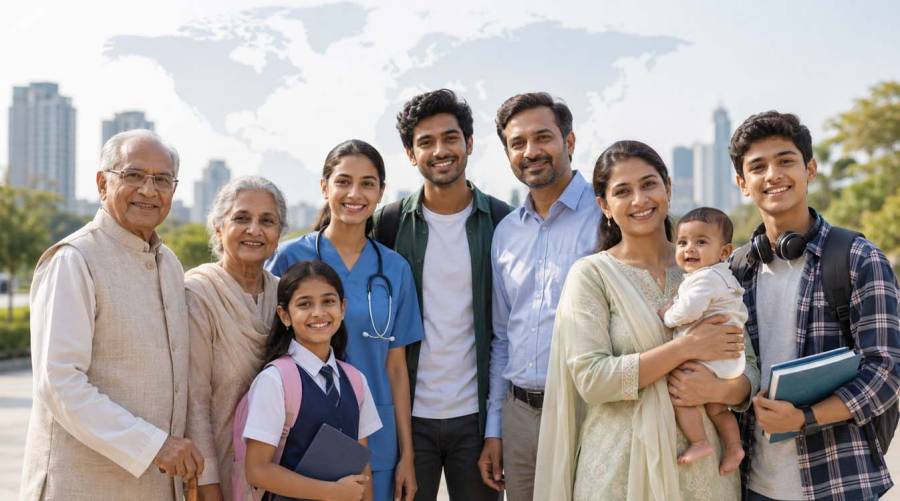
KARACHI: The world is home to more people than at any point in human history, but global health experts say the greatest population challenge facing humanity is no longer simply how many people live on Earth. It is whether governments can ensure that every person—especially every young person—has access to quality healthcare, education, equal opportunities and the freedom to make informed decisions about their future.
As the world observes World Population Day on July 11, 2026, the conversation has shifted dramatically from concerns over rapid population growth to broader questions about demographic change, population ageing, declining fertility in many countries, migration, reproductive rights and sustainable development.
This year's observance comes under the United Nations theme: "Realizing the hopes and aspirations of young people – today and for the future."
The theme reflects growing international recognition that today's young generation will shape the future of societies, economies and healthcare systems—but only if countries invest in their education, health, skills and wellbeing.
The United Nations estimates that the global population has now reached approximately 8.2 billion people, with projections indicating it could rise to around 9 billion by 2039, exceed 10 billion by 2060, and peak at approximately 10.6 billion around 2092 before gradually beginning to decline later in the century.
These projections illustrate that while population growth is slowing globally, demographic shifts will continue to reshape healthcare, economies and public policy for decades.
From five billion to more than eight billion
World Population Day traces its origins to July 11, 1987, when the world's population was estimated to have reached five billion people.
The symbolic milestone, widely known as the "Day of Five Billion," attracted unprecedented international attention and sparked discussions about whether governments were adequately preparing for rapid population growth.
Recognising the importance of these issues, the United Nations Development Programme (UNDP) established World Population Day in 1989.
A year later, in December 1990, the United Nations General Assembly adopted Resolution 45/216, officially endorsing the annual global observance beginning in 1990.
More than three decades later, the day has evolved beyond counting people. It now serves as a platform to discuss:
• Population health
• Maternal and reproductive healthcare
• Gender equality
• Family planning
• Youth empowerment
• Human rights
• Healthy ageing
• Climate resilience
• Sustainable development
Why World Population Day matters in 2026
Population statistics influence nearly every aspect of modern life.
They determine how many hospitals a country requires, where schools should be built, how governments prepare for ageing societies, how many healthcare workers will be needed, and whether food, housing, employment opportunities and essential services can meet future demand.
For health professionals, demographic trends directly affect disease patterns.
Countries with rapidly growing young populations often face challenges related to maternal health, childhood nutrition, immunisation, infectious diseases and employment.
Meanwhile, countries with ageing populations increasingly confront chronic illnesses such as dementia, cardiovascular disease, diabetes, osteoporosis and cancer.
In other words, population is not merely a demographic issue—it is fundamentally a public health issue.
This year's theme puts young people at the centre
Unlike previous years that focused primarily on fertility or population growth, the 2026 World Population Day theme centres on young people.
According to the United Nations Population Fund (UNFPA), investing in youth means more than expanding education.
It includes ensuring adolescents and young adults have access to:
• Comprehensive healthcare
• Sexual and reproductive health services
• Mental health support
• Equal educational opportunities
• Skills development
• Decent employment
• Participation in public decision-making
• Young people today represent one of history's largest generations.
How governments respond to their needs will influence economic growth, innovation, healthcare systems and social stability for decades.
The world faces very different population challenges
One of the biggest misconceptions about global population is that every country faces the same demographic issues.
The reality is exactly the opposite.
Many low- and middle-income countries continue experiencing relatively rapid population growth, creating increased demand for schools, hospitals, employment and housing.
At the same time, several high-income countries—including Japan, Italy, South Korea, Germany and others—are experiencing historically low birth rates alongside rapidly ageing populations.
This phenomenon is often described as the "Silver Tsunami."
As more citizens live beyond the age of 65, healthcare systems face mounting pressure from chronic diseases, long-term care requirements and shrinking working-age populations.
These contrasting demographic realities demonstrate why there is no universal population policy.
Every country must respond according to its own population structure.
Population is about people—not numbers
International health agencies increasingly emphasise that population policies should never focus solely on increasing or reducing birth rates.
Instead, they should protect individual rights.
The United Nations stresses that every person should have the ability to make informed decisions regarding family planning, reproductive health and parenthood without coercion, discrimination or barriers to healthcare.
This rights-based approach has become central to modern population policy.
Healthcare access, women's education, gender equality and economic opportunity consistently lead to healthier families and more sustainable demographic outcomes.
Why reproductive health remains central
Reproductive healthcare remains one of the most important pillars of World Population Day.
Despite decades of progress, millions of women worldwide continue to experience preventable complications during pregnancy and childbirth.
Access to skilled birth attendants, antenatal care, family planning services, safe delivery facilities and postnatal care remains uneven across many regions.
Improving reproductive health not only saves lives but also contributes to lower maternal mortality, healthier newborns, improved educational attainment and stronger economic participation among women.
Health experts continue to emphasise that reproductive healthcare is both a public health priority and a fundamental human right.
The strong link between population and sustainable development
Population issues intersect with nearly every Sustainable Development Goal (SDG).
World Population Day particularly reinforces:
• SDG 3: Good Health and Well-being
• SDG 5: Gender Equality
• SDG 10: Reduced Inequalities
• SDG 4: Quality Education
• SDG 12: Responsible Consumption and Production
Rapid demographic change influences healthcare demand, environmental sustainability, food security, employment, urban planning and climate resilience.
As a result, population policy is increasingly viewed through a multidisciplinary lens rather than solely through the perspective of fertility statistics.
Pakistan's demographic opportunity
For Pakistan, World Population Day carries particular significance.
With more than 65% of its population below the age of 30, the country possesses one of the world's youngest populations.
Economists often describe this as a potential demographic dividend—a period during which a large working-age population can accelerate national economic growth.
However, demographic dividends do not occur automatically.
Experts consistently note that young populations become economic assets only when governments invest in:
• Education
• Healthcare
• Nutrition
• Technical skills
• Employment opportunities
• Women's empowerment
• Innovation
• Entrepreneurship
Without such investments, rapid population growth may instead intensify unemployment, poverty and pressure on healthcare systems.
President calls for investing in Pakistan's youth
In his message marking World Population Day 2026, President Asif Ali Zardari urged all sectors of society to work together to transform Pakistan's youthful population into a driver of sustainable national development.
Referring to this year's global theme, the President said Pakistan's young population represents an extraordinary national opportunity. He noted that more than 65% of Pakistanis are under the age of 30 and stressed that providing young people with quality education, healthcare, technical skills and employment opportunities would enable them to become a powerful demographic dividend capable of accelerating economic growth, innovation and social progress.
He also emphasized that improving maternal and child health, expanding access to quality healthcare, ensuring proper nutrition, promoting girls' education and advancing gender equality are essential foundations for long-term national development.
Paying tribute to former Prime Minister Shaheed Mohtarma Benazir Bhutto, President Zardari recalled her commitment to women's empowerment, education and reproductive health, describing those principles as continuing to guide Pakistan's development agenda.
Calling for collective action, he urged government institutions, parliamentarians, universities, civil society organizations, development partners, religious leaders, media organizations and local communities to work together to improve public health and build a more equitable society where every citizen has the opportunity to realize their aspirations.
Population growth alone does not define development
Health experts increasingly caution against viewing population solely through the lens of numbers.
Countries with similar population sizes often experience dramatically different health outcomes depending on how effectively they invest in healthcare systems, education, sanitation, nutrition, women's empowerment and disease prevention.
A growing population can become a tremendous economic advantage when accompanied by strong investments in human capital.
Conversely, insufficient investment in health and education may place increasing pressure on hospitals, schools, infrastructure, employment opportunities and public finances.
For this reason, international organizations now encourage governments to focus on improving the quality of life rather than simply managing population growth.
Pakistan's population challenges remain multidimensional
Pakistan continues to face several interconnected demographic and public health challenges.
These include:
• Maternal and newborn health
• Child nutrition and stunting
• Unequal access to reproductive healthcare
• Family planning services
• Rapid urbanization
• Youth unemployment
• Climate-related displacement
• Internal migration
• Healthcare access in rural communities
Public health specialists argue that addressing these issues requires coordinated policies extending beyond the health sector to include education, social protection, women's empowerment, environmental sustainability and economic development.
Strengthening primary healthcare, improving vaccination coverage, expanding skilled birth attendance and ensuring equitable access to reproductive health services remain among Pakistan's most important health priorities.
The future will be shaped by today's decisions
Demographers say the coming decades will transform the global population landscape.
Some countries will continue to grow rapidly.
Others will experience shrinking populations.
Many will grow older.
Almost all will face increasing healthcare demands.
Preparing for these changes requires evidence-based policymaking supported by reliable demographic data, scientific research and long-term planning.
Investment in healthcare today determines population health tomorrow.
Similarly, investment in young people today determines the strength of tomorrow's workforce, economy and innovation capacity.
More than an awareness day
World Population Day is not simply an annual observance.
It serves as a reminder that behind every population statistic is an individual with aspirations, rights and healthcare needs.
The day encourages governments to strengthen healthcare systems, expand educational opportunities, promote gender equality, protect reproductive rights and ensure that population policies place people—not numbers—at the centre of decision-making.
As the global population moves toward an estimated 9 billion people within little more than a decade, the choices made today will shape the health, prosperity and sustainability of future generations.
For Pakistan, the message is particularly clear: investing in its young people today may become the country's greatest opportunity to secure healthier communities, stronger economic growth and a more resilient future.
Stay informed, stay alert!
CLICK HERE TO JOIN Medical News Pakistan on WhatsApp for real-time health alerts, expert insights, and breakthrough medical discoveries.

Advertisement
E-PAPER
Trending
Popular
Pakistan’s Dr. Misha Tanveer takes air pollution research to Europe ...
-
Calorie deficit for weight loss: How to ...
06:00 PM, 24 Aug, 2026 -
Vaccine maker warns of wider TBE, ...
05:00 PM, 21 Aug, 2026 -
FDA authorizes first robot to draw ...
06:11 PM, 20 Aug, 2026 -
One blood test for multiple cancers ...
04:52 PM, 11 Aug, 2026
Follow us on Facebook
Follow us on Twitter
Copyright ©2026 Medical News. All Rights Reserved.