
PMDC postpones MDCAT 2026 to September on PM's directions as uncertainty returns
After months of insisting the exam would be held soon after intermediate examinations, PMDC has deferred MDCAT 2026 to September 20. The move follows sustained concerns from students and a fresh Lahore High Court petition, but the regulator has not explained what prompted the last-minute change.
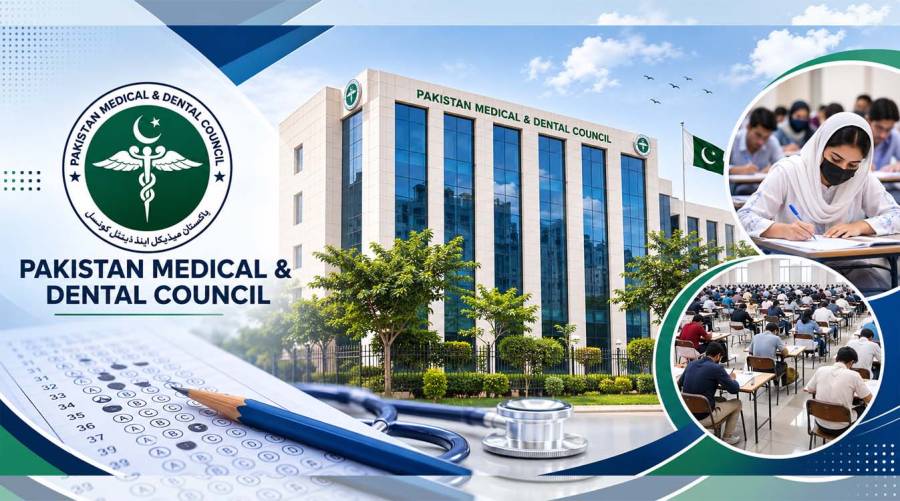
ISLAMABAD: Just weeks after repeatedly assuring aspiring doctors and dentists that the Medical and Dental College Admission Test (MDCAT) 2026 would be held on August 16, the Pakistan Medical and Dental Council (PMDC) has postponed the country's biggest medical entrance examination to September 20, reigniting uncertainty for tens of thousands of students whose academic future depends on the test.
In a brief press release, PMDC said the decision was taken "on the directions of the Hon'ble Prime Minister" to ensure the "smooth, secure and transparent conduct" of the examination.
However, the announcement leaves a critical question unanswered: What changed so significantly that required intervention from the Prime Minister only days before the scheduled exam?
That omission has become the centre of discussion among students, parents and education stakeholders who have spent months navigating changing timelines and conflicting expectations.
Students had been raising concerns from day one
The postponement did not emerge in a vacuum.
Ever since Federal Health Minister Mustafa Kamal announced that MDCAT 2026 would be conducted within a week of the conclusion of intermediate examinations, many students, parents and academic circles questioned whether the timeline allowed sufficient preparation for one of Pakistan's most competitive examinations.
Aspirants argued that the compressed schedule was markedly different from previous years and left little time to revise the extensive MDCAT syllabus after board examinations.
Those concerns continued throughout the registration period, with students repeatedly requesting PMDC to reconsider the examination date and consult stakeholders before finalising the schedule.
Despite these concerns, PMDC maintained the August 16 examination date in its official notifications and repeatedly conveyed that preparations for the examination were on track.
A Lahore High Court petition added legal pressure
The debate over the examination timetable intensified this week when a group of MDCAT aspirants approached the Lahore High Court, seeking postponement of the examination and arguing that students had not been given adequate preparation time following their intermediate examinations. Community groups representing aspirants also mobilised students to attend court proceedings and support the petition.
While PMDC has now postponed the examination, the council has not stated whether the court proceedings, students' representations or any administrative review played any role in the decision.
Instead, the regulator has attributed the postponement solely to directions from Prime Minister Shehbaz Sharif, without elaborating on what prompted those directions.
Transparency cited—but no reason disclosed
PMDC's official statement says the revised schedule is intended to facilitate candidates while ensuring a "smooth, secure and transparent" examination process.
Yet the announcement identifies no specific security concern, logistical issue, administrative challenge or policy development that made postponement necessary after months of preparations and repeated public assurances that the examination would proceed as scheduled.
The absence of an official explanation has left students trying to understand why the country's most important medical entrance examination required a sudden change only days before it was due to take place.
A familiar cycle returns
For many MDCAT aspirants, the latest postponement feels less like an isolated decision and more like a continuation of a recurring pattern.
Over recent admission cycles, students have witnessed repeated changes to examination schedules, admission policies, eligibility criteria and regulatory decisions, often after candidates had already adjusted their preparation strategies.
Each change has come with an official explanation, but many aspirants argue that frequent revisions have made it increasingly difficult to plan their studies and admissions with confidence.
The latest postponement has once again shifted attention away from exam preparation and towards questions about planning, communication and institutional readiness.
What remains unchanged
According to PMDC, all other examination arrangements, terms and conditions remain unchanged, unless notified otherwise.
Candidates have been advised to continue following PMDC's official website and communication channels for further instructions regarding MDCAT 2026.
The council also expressed regret for the inconvenience caused and thanked students, parents and educational institutions for their understanding and cooperation.
The larger issue goes beyond a revised exam date
For more than 100,000 aspiring MBBS and BDS applicants, MDCAT is not merely another examination—it determines admissions, academic calendars and career trajectories.
Education experts have long argued that national entrance examinations require consistency, predictability and transparent decision-making because even minor scheduling changes can have significant academic and psychological consequences for students.
While many aspirants may welcome additional preparation time, the latest development has also renewed calls for greater stakeholder consultation, earlier policy decisions and clearer communication so that future admission cycles are not overshadowed by uncertainty.
With MDCAT now scheduled for September 20, students will hope the revised date finally provides the stability that has remained elusive throughout the admission process.
Stay connected with Medical News Pakistan
CLICK HERE TO JOIN the official Medical News Pakistan WhatsApp Channel for verified global medical breakthroughs, FDA approvals, healthcare innovations, clinical research updates and the latest developments shaping medicine around the world.

Advertisement
E-PAPER
Trending
Popular
Pakistan’s Dr. Misha Tanveer takes air pollution research to Europe ...
-
Calorie deficit for weight loss: How to ...
06:00 PM, 24 Aug, 2026 -
Vaccine maker warns of wider TBE, ...
05:00 PM, 21 Aug, 2026 -
FDA authorizes first robot to draw ...
06:11 PM, 20 Aug, 2026 -
One blood test for multiple cancers ...
04:52 PM, 11 Aug, 2026
Follow us on Facebook
Follow us on Twitter
Copyright ©2026 Medical News. All Rights Reserved.