
This simple routine could quietly protect your balance — and prevent dangerous falls
New research reveals how a low-intensity, lying-down workout improves balance, agility, and coordination — offering a promising tool for fall prevention and early rehabilitation
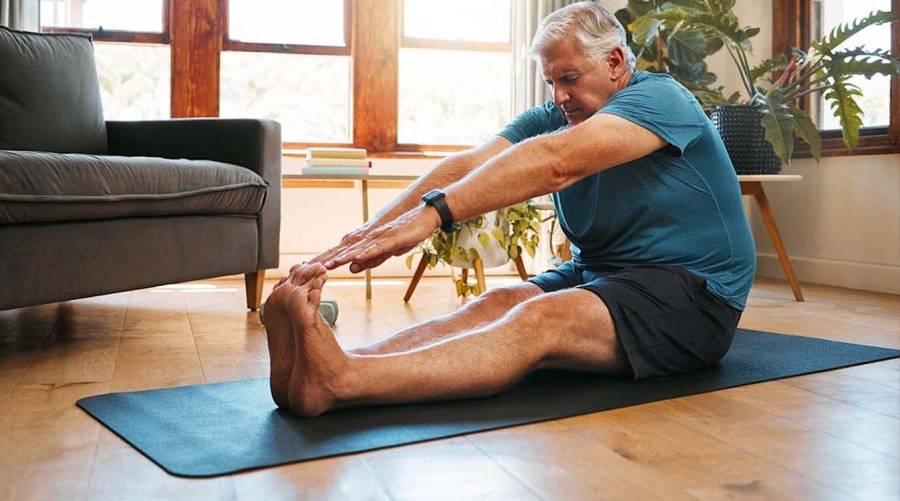
What if one of the biggest threats to long-term health — losing balance — could be tackled in just 10 minutes a day, without even standing up?
A new study published in PLOS One is turning conventional fitness thinking on its head, suggesting that a short, low-intensity exercise routine performed lying down may significantly improve balance, agility, and trunk flexibility. And while the study focused on healthy young adults, its implications could be far bigger — especially in a world where falls are a leading cause of injury and death among older adults.
A quiet crisis: why balance matters more than you think
Balance is often taken for granted — until it starts to fail. Maintaining stability requires complex coordination between the brain, muscles, and body segments, particularly the trunk and lower limbs.
When that coordination weakens, the consequences can be serious. According to the World Health Organization, falls are the second leading cause of unintentional injury deaths worldwide. Each year, an estimated 684,000 individuals die from falls globally, with adults over 60 carrying the highest risk.
This makes balance not just a fitness goal — but a public health priority.
The 10-minute routine changing how we think about exercise
To address a critical gap in training approaches, researchers from the Tokyo University of Agriculture and Technology developed a simple exercise program performed entirely in a supine (lying-down) position.
The idea is deceptively simple: remove gravity and stability challenges, allowing the body to focus purely on coordination.
The routine includes:
• Abdominal press to activate core stability
• Small bridge movements to connect hips and spine
• Leg slides for controlled lower limb motion
• Toe-based “rock-paper-scissors” for fine motor control
Rather than building muscle strength, the exercises train how the body uses existing muscles — improving neuromuscular coordination.
The science behind the results
Led by Professor Yoriko Atomi, the study found measurable improvements after just two weeks of daily practice.
Participants showed:
• Reduced body sway during standing
• Better agility in side-step movements
• Increased trunk flexibility
Interestingly, there were no significant gains in strength or power — reinforcing the idea that coordination, not muscle growth, was driving the improvements.
“In simple terms, the body becomes better at using the muscles it already has,” Atomi explained.
Why lying down may be the key
The supine position removes the burden of supporting body weight, allowing individuals to focus on controlled movement without strain.
This makes the routine:
• Safer for beginners
• Accessible for people with mobility issues
• Suitable for early-stage rehabilitation
It also creates a stable environment where the brain can “relearn” efficient movement patterns — something that may translate into better balance when standing or walking.
Beyond fitness: a potential tool against falls
While the study stops short of directly testing older adults, its implications are hard to ignore.
Falls are not just accidents — they are often the result of declining coordination, poor posture, and weakened neuromuscular control. A simple, low-risk routine like this could become a valuable addition to fall prevention strategies, particularly for:
• Older adults
• Sedentary individuals
• Patients recovering from injury
A small habit with potentially life-changing impact
Professor Atomi herself highlighted the real-world benefits, noting that she uses the routine daily to manage knee and lower back pain.
The broader message is clear: improving balance doesn’t always require intense workouts or complex equipment. Sometimes, consistency and smart design matter more than intensity.
The bigger shift in modern health thinking
This research reflects a growing shift in how experts approach movement and health. Instead of focusing solely on strength or endurance, there is increasing recognition of coordination, control, and efficiency as key pillars of physical well-being.
In a world where aging populations and sedentary lifestyles are on the rise, simple, scalable solutions like this could play a critical role in reducing injury risk and preserving independence.
The takeaway? Staying upright — and staying safe — might begin with something as simple as lying down and moving with intention.
Stay informed, stay alert
CLICK HERE TO JOIN Medical News Pakistan on WhatsApp for real-time health alerts, expert insights, and breakthrough medical discoveries.

Advertisement
E-PAPER

Trending
Popular
Pakistan’s Dr. Misha Tanveer takes air pollution research to Europe ...
-
Calorie deficit for weight loss: How to ...
06:00 PM, 24 Aug, 2026 -
Vaccine maker warns of wider TBE, ...
05:00 PM, 21 Aug, 2026 -
FDA authorizes first robot to draw ...
06:11 PM, 20 Aug, 2026 -
One blood test for multiple cancers ...
04:52 PM, 11 Aug, 2026
Follow us on Facebook
Follow us on Twitter
Copyright ©2026 Medical News. All Rights Reserved.

