
PM Shehbaz orders nationwide ban on substandard syringes to curb spread of infectious diseases
Prime Minister Shehbaz Sharif has directed authorities to impose a complete ban on the manufacture and use of substandard syringes, initiate legal action against those responsible for unsafe injection practices and formulate a national strategy to curb the spread of HIV, hepatitis C and other infectious diseases.
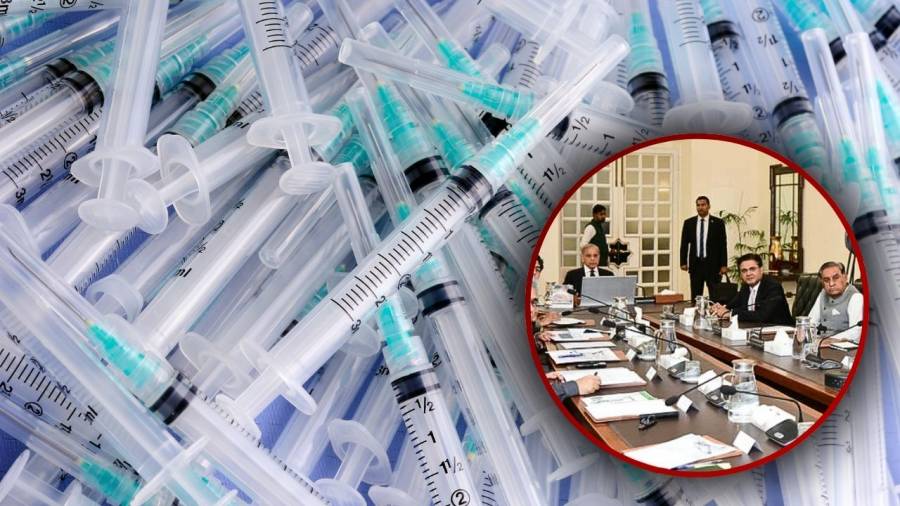
ISLAMABAD: Prime Minister Muhammad Shehbaz Sharif has ordered a nationwide crackdown on the manufacture and use of substandard syringes, directing authorities to impose a complete ban on unsafe injection devices as Pakistan intensifies efforts to curb the spread of HIV, hepatitis C and other infectious diseases.
The directives were issued during a high-level review meeting in Islamabad on measures being taken to prevent communicable diseases, particularly HIV and hepatitis C, which continue to pose significant public health challenges across the country.
Emphasising the urgency of the issue, the prime minister ordered strict legal action against individuals, hospitals and healthcare facilities found involved in the use of non-compliant syringes or guilty of criminal negligence in preventing unsafe injection practices.
The prime minister also directed the formation of a special committee of experts tasked with developing recommendations for controlling infectious diseases and preventing healthcare-associated transmission of blood-borne infections.
Calling for a coordinated national response, Prime Minister Shehbaz Sharif instructed the committee to ensure close consultation with provincial governments while formulating its recommendations.
He further directed the Ministry of Law and Justice to work with relevant institutions to propose necessary amendments to Pakistan's legal and regulatory framework governing the manufacture, supply and use of medical devices and injection practices.
"A comprehensive national strategy and its effective implementation are the only sustainable solution to this problem," the prime minister said during the meeting.
The prime minister also instructed the Drug Regulatory Authority of Pakistan (DRAP) to engage with the medical devices industry and recommend policy interventions aimed at permanently preventing the spread of infectious diseases through unsafe syringe practices.
A major public health challenge
Pakistan carries one of the world's highest burdens of hepatitis C and has witnessed recurring HIV outbreaks over the past decade, particularly among children and vulnerable communities.
According to estimates from international health agencies, millions of Pakistanis are living with chronic hepatitis C infection, while repeated investigations have linked unsafe injection practices, reuse of syringes and inadequate infection prevention measures to the transmission of blood-borne diseases.
The issue has repeatedly drawn public attention following healthcare-associated HIV outbreaks in different parts of the country, including Sindh and Punjab, where investigations highlighted concerns regarding infection prevention protocols and syringe safety.
Public health experts have long warned that unsafe injections remain one of the most preventable drivers of HIV and hepatitis transmission in Pakistan and have repeatedly called for stronger regulation, better enforcement and improved training of healthcare workers.
International cooperation and health system strengthening
Prime Minister Shehbaz Sharif also emphasised the importance of support from international development partners in the country's ongoing efforts to contain infectious diseases.
He underscored the need to focus on strengthening domestic manufacturing of medical equipment and ensuring world-class training of healthcare professionals involved in infection prevention and patient care.
The meeting was briefed on the progress made by the special task force constituted on the prime minister's directives and by the Ministry of National Health Services, Regulations and Coordination regarding measures being implemented to curb the spread of communicable diseases.
The meeting was attended by Federal Minister for Law and Justice Azam Nazeer Tarar, Minister of State for Health Dr Mukhtar Ahmad Bharath, Attorney General of Pakistan Mansoor Usman Awan, Global Fund representative Izaskun Gaviria, public health experts, representatives of the Ministry of National Health Services and DRAP, and senior government officials.
Why this matters
Public health experts say the prime minister's directives could represent an important policy shift if accompanied by strict enforcement, robust surveillance systems and sustained collaboration between federal and provincial authorities.
As Pakistan continues to grapple with recurring outbreaks of HIV and one of the world's highest hepatitis C burdens, experts believe that eliminating unsafe injections and ensuring compliance with medical device standards could become one of the country's most consequential public health interventions.
Stay informed, stay alert!
CLICK HERE TO JOIN Medical News Pakistan on WhatsApp for real-time health alerts, expert insights, and breakthrough medical discoveries.

Advertisement
E-PAPER
Trending
Popular
Pakistan’s Dr. Misha Tanveer takes air pollution research to Europe ...
-
Calorie deficit for weight loss: How to ...
06:00 PM, 24 Aug, 2026 -
Vaccine maker warns of wider TBE, ...
05:00 PM, 21 Aug, 2026 -
FDA authorizes first robot to draw ...
06:11 PM, 20 Aug, 2026 -
One blood test for multiple cancers ...
04:52 PM, 11 Aug, 2026
Follow us on Facebook
Follow us on Twitter
Copyright ©2026 Medical News. All Rights Reserved.