
Indus Hospital-led roadmap outlines Karachi’s strongest rabies response yet
With Karachi’s stray dog population estimated at up to 1.5 million and children increasingly at risk, a major Indus Hospital-led consultation has unveiled a humane, evidence-based strategy that could redefine rabies control in Pakistan.
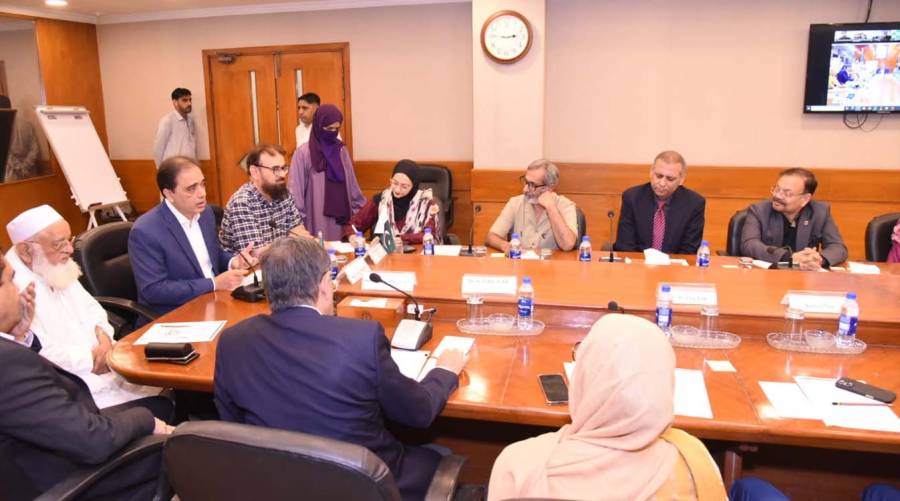
KARACHI: Karachi’s stray dog crisis is no longer just a municipal nuisance—it is now a full-scale public health emergency threatening children, families, and the city’s sense of safety.
As dog bite numbers continue to surge and rabies fatalities keep exposing dangerous gaps in bite management, healthcare access, and urban governance, a major multi-stakeholder consultation at The Indus Hospital has now laid out what may be the city’s most serious science-backed roadmap yet to stop the crisis before it spirals further.
The urgency could not be clearer. Karachi has already witnessed hundreds of dog bite cases within days at the start of 2026, while hospitals across the city remain under pressure from rising post-bite treatment demand.
The consultation brought together 35 participants from IHHN, veterinary professionals, animal welfare organizations, legal experts, government departments, media, and civil society, all united by a growing fear: Karachi’s stray dog population may now range between 1 million and 1.5 million animals.
That scale has transformed the issue from scattered incidents into a daily urban threat, particularly for children, delivery riders, factory workers, and residents in high-risk neighbourhoods.
Many families are increasingly reluctant to let children play outside due to aggressive dog packs, repeated bite incidents, and the specter of rabies, a disease that becomes nearly 100% fatal once symptoms appear. Karachi’s hospitals have already reported rabies deaths this year linked to delayed or incomplete post-bite care.
One of the most powerful outcomes of the meeting was a strong consensus against mass culling.
While some participants pushed for immediate elimination drives, the majority rejected the approach, aligning with World Health Organization guidance and ICAM Coalition evidence, which consistently shows that culling is ineffective, temporary, and unsustainable because new dogs quickly replace removed populations. WHO’s long-standing Karachi work has supported this same evidence-based model.
Instead, the consultation endorsed a humane principle with a powerful public message:
“No poison, no bullet.”
The preferred model combines:
- Mass dog vaccination (MDV)
- Dog population management (DPM)
- Hotspot mapping
- Zone-based implementation
- Validation of dog population estimates
- Stronger veterinary training pipelines
- Improved anti-rabies vaccine and Rabies Immunoglobulin (RIG) access
- Environmental cleanup and waste control
This is not just animal welfare policy—it is human survival policy.
A critical insight from the consultation is that Karachi’s dog crisis is also a waste management crisis, data crisis, and governance crisis.
Participants identified major systemic gaps:
- Absence of a clear citywide or provincial policy framework
- Weak accountability in previous TNVR campaigns
- Fragmented data systems
- Poor solid waste management fueling unchecked breeding
- Low public awareness about post-bite care
- Inadequate healthcare worker training
- Limited vaccine and RIG availability
This broader framing makes the story much bigger than dog control alone.
It positions rabies as a One Health emergency, where human health, veterinary systems, urban sanitation, and political governance intersect.
The proposed action plan is notably execution-focused.
It calls for:
- Appointment of a full-time program manager
- Cost and capacity projections
- Centralized digital data tracking
- Pilot district implementation
- A public-private partnership model
- Collaboration with global partners including FOUR PAWS International and UNICEF
- Stronger integration with the Rabies Free Pakistan initiative
The most important shift is philosophical: Karachi is being positioned to move from reactive dog killing and emergency bite response toward a sustainable, scalable rabies elimination model for Sindh and eventually Pakistan.
The science is already available.
The veterinary model is already proven globally in countries such as Türkiye, Mexico, and Morocco.
The missing ingredient, as participants concluded, is political will.
Karachi now stands at a decisive crossroads: continue cycling through fear, bites, and preventable deaths—or become the city that finally proved Pakistan can defeat dog-mediated rabies without cruelty.
And that is what makes this more than a Karachi story.
It is a test case for whether Pakistan can solve a deadly, visible, emotionally charged public health problem using science instead of panic.
Stay informed, stay protected
CLICK HERE TO JOIN Medical News Pakistan on WhatsApp for real-time health alerts, expert insights, and breakthrough medical discoveries.

Advertisement
E-PAPER
Trending
Popular
Pakistan’s Dr. Misha Tanveer takes air pollution research to Europe ...
-
Calorie deficit for weight loss: How to ...
06:00 PM, 24 Aug, 2026 -
Vaccine maker warns of wider TBE, ...
05:00 PM, 21 Aug, 2026 -
FDA authorizes first robot to draw ...
06:11 PM, 20 Aug, 2026 -
One blood test for multiple cancers ...
04:52 PM, 11 Aug, 2026
Follow us on Facebook
Follow us on Twitter
Copyright ©2026 Medical News. All Rights Reserved.