
Balochistan govt, AKU launch major healthcare initiative, backed by Gates Foundation
The 36-month initiative aims to expand essential health services, improve health coverage and help reduce maternal, neonatal, infant and child mortality across the province.
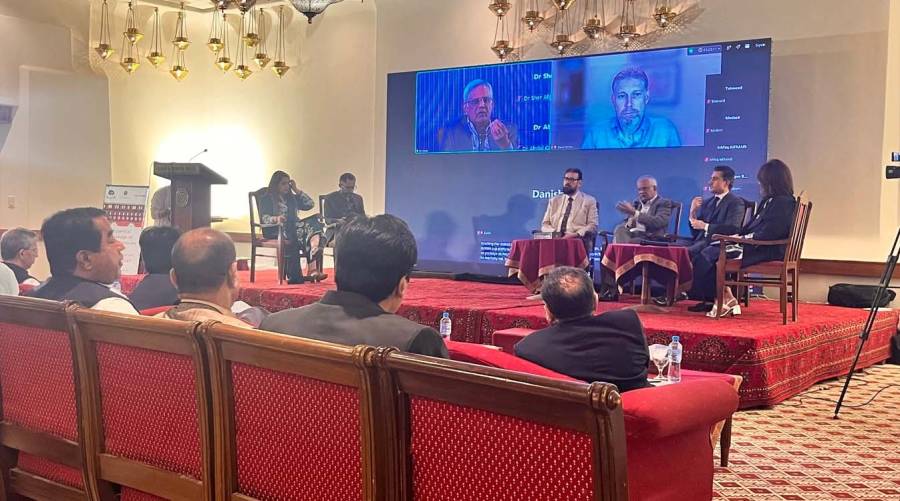
QUETTA: A major new healthcare initiative backed by the Gates Foundation has been launched in Balochistan, bringing government, academia and global health partners together in a three-year effort to strengthen essential health services and improve outcomes for mothers and children.
The Government of Balochistan and Aga Khan University (AKU) officially launched the Essential Package of Health Services (EPHS) Implementation Project in Quetta, setting in motion a 36-month programme aimed at improving the way essential healthcare is delivered at the district level.
At the heart of the initiative is a challenge that extends far beyond individual hospitals or health facilities: ensuring that people in underserved communities can consistently access the healthcare services they need.
The project aims to improve the Service Coverage Index while contributing to reductions in maternal, neonatal, infant and child mortality — placing some of Balochistan's most critical public-health challenges at the centre of the three-year effort.
The initial implementation will focus on Lasbela and Upper Dera Bugti, where strengthening access to essential health services is expected to be particularly important.
But the significance of the initiative extends beyond its starting districts.
With the Government of Balochistan, Aga Khan University and the Gates Foundation involved alongside national and international health-sector partners, the project represents a broader attempt to build a stronger and more responsive health system across the province.
Why this healthcare initiative matters
For communities, the success of a health-system programme is ultimately measured in practical terms: whether essential services are available when people need them, whether mothers can receive appropriate care, whether newborns and children have access to timely healthcare, and whether gaps in coverage can be reduced.
The EPHS Implementation Project is designed around precisely these priorities.
By concentrating on essential health services at district level, the initiative seeks to strengthen the part of the health system that connects communities with routine and critical care.
The 36-month timeframe also gives the programme a defined period in which implementation and improvements in health-service coverage can be tracked.
A three-year effort focused on health coverage
The Essential Package of Health Services provides the framework for the initiative, while the Service Coverage Index will be an important measure of progress.
The focus is not simply on introducing additional services. It is on strengthening the delivery and coverage of essential healthcare in areas where communities face significant needs.
The project's stated health priorities include maternal, neonatal, infant and child health — areas where improvements in access and quality of care can have consequences that extend well beyond individual patients.
For Balochistan, the initiative therefore places health-system strengthening and health equity at the centre of a major multi-partner effort.
Government and global health partners come together
The launch brought together senior provincial officials, academic experts, development partners, bilateral representatives and health-sector leaders.
The panel discussion featured Secretary Health Mujeeb Ur Rehman, Professor Sameen Siddiqi of Aga Khan University, Dr. David Wilson of the Gates Foundation, Dr. Asfandyar Sherani of the World Health Organization, Dr. Abdul Bari Khan of Indus Hospital & Health Network and Dr. Shabana Haider of the Planning Commission.
The discussion was moderated by Dr. Maryam Huda of Aga Khan University and Dr. Shahkoh Mengel of the Government of Balochistan.
The breadth of participation reflects the initiative's multi-sector character, combining provincial health leadership with academic expertise, development financing, international health perspectives and experience in healthcare delivery and planning.
‘Starting in districts where the need is greatest’
Speaking at the launch, Health Minister Bakht Muhammad Kakar highlighted the importance of strengthening healthcare services in Balochistan.
Chief Minister Mir Sarfraz Ahmed Bugti formally launched the project and underscored its focus on areas facing the greatest need.
“We are starting in districts where the need is greatest, with the aim of building a stronger and more responsive health system for people across the province.”
The initial focus on Lasbela and Upper Dera Bugti gives the project a defined starting point, while its stated ambition is tied to the larger objective of strengthening healthcare across Balochistan.
What will determine whether it succeeds?
The next three years will be critical in determining whether the initiative can translate its objectives into measurable improvements in healthcare coverage.
For communities, the most meaningful indicators will be whether essential services become more accessible, whether health-system gaps are addressed and whether improvements in coverage contribute to better outcomes for mothers, newborns, infants and children.
The project's progress will also be assessed through improvements in the Service Coverage Index, providing a way to track whether access to essential services is actually expanding.
Ultimately, the scale of the partnership is significant, but its lasting impact will depend on what happens beyond the launch ceremony — and whether a three-year investment in essential healthcare can produce stronger, more responsive services for people across Balochistan.
Stay connected with Medical News Pakistan
CLICK HERE TO JOIN the official Medical News Pakistan WhatsApp Channel for verified global medical breakthroughs, FDA approvals, healthcare innovations, clinical research updates and the latest developments shaping medicine around the world.

Advertisement
E-PAPER
Trending
Popular
Pakistan’s Dr. Misha Tanveer takes air pollution research to Europe ...
-
Calorie deficit for weight loss: How to ...
06:00 PM, 24 Aug, 2026 -
Vaccine maker warns of wider TBE, ...
05:00 PM, 21 Aug, 2026 -
FDA authorizes first robot to draw ...
06:11 PM, 20 Aug, 2026 -
One blood test for multiple cancers ...
04:52 PM, 11 Aug, 2026
Follow us on Facebook
Follow us on Twitter
Copyright ©2026 Medical News. All Rights Reserved.