WHO keeps polio under global emergency as Pakistan remains a key transmission reservoir
Pakistan and Afghanistan remain the world’s only countries with endemic wild poliovirus transmission, while WHO warns that Karachi and South Khyber Pakhtunkhwa continue to sustain local spread despite a fall in reported cases and environmental detections.
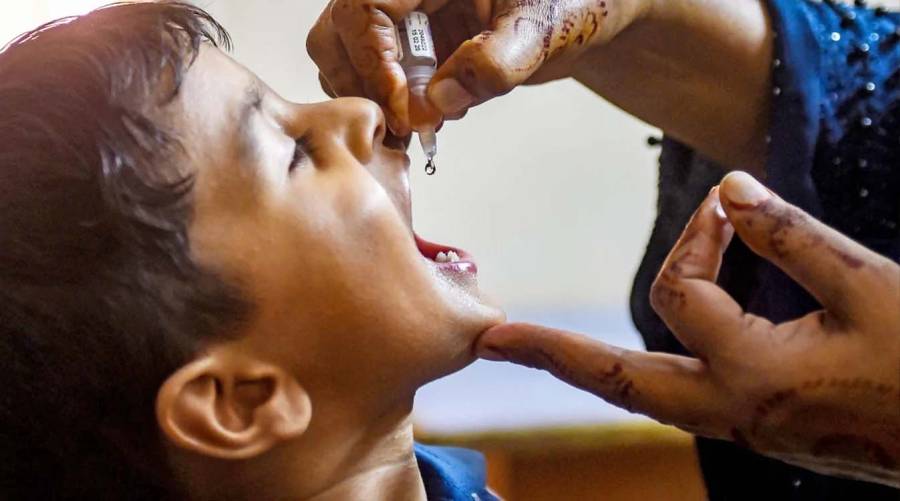
GENEVA/ISLAMABAD: The World Health Organization has kept the international spread of poliovirus classified as a Public Health Emergency of International Concern (PHEIC), with Pakistan remaining at the centre of the global eradication challenge alongside Afghanistan.
In its latest assessment, WHO’s International Health Regulations Emergency Committee concluded that the risk of international spread continues to justify emergency status and recommended extending temporary measures for another three months. The committee did, however, determine that the current poliovirus situation does not meet the threshold for a “pandemic emergency.”
The warning comes at a critical point for Pakistan.
Although the overall number of wild poliovirus type 1 (WPV1) cases and positive environmental samples has declined, WHO says transmission remains entrenched in several high-risk areas — particularly Karachi and South Khyber Pakhtunkhwa — and that the apparent improvement should not be mistaken for eradication.
That distinction is important, because Pakistan’s case count alone does not show the full scale of transmission.
Pakistan remains one of only two endemic countries
Pakistan and Afghanistan remain the world’s only countries where wild poliovirus type 1 continues to circulate endemically.
According to WHO data reviewed by the committee, four WPV1 cases had been reported in 2026 at the time of the assessment — three in Afghanistan and one in Pakistan. In 2025, the two countries reported 52 cases between them, including 31 in Pakistan and 21 in Afghanistan.
But the environmental surveillance picture is more concerning.
Pakistan accounted for 57 of the 74 WPV1-positive environmental samples reported in 2026, compared with 17 in Afghanistan.
Those wastewater findings matter because they can reveal poliovirus circulation even when no child develops paralysis.
In other words, a low number of confirmed paralytic cases does not necessarily mean the virus has disappeared from communities.
Karachi remains a major poliovirus reservoir
One of the strongest warnings in the WHO review concerns Karachi.
The committee said sustained local WPV1 transmission remains concentrated in three critical areas: southern Afghanistan, South Khyber Pakhtunkhwa and Karachi.
It described Karachi as a significant reservoir for poliovirus transmission, noting widespread environmental positivity and evidence that local circulation is continuing.
That makes Karachi especially important to Pakistan’s eradication prospects.
The committee acknowledged early signs of improvement after recommendations from a Karachi programme audit were implemented, including a decline in environmental detections and better campaign quality indicators.
But WHO cautioned that these gains are still at an early stage and do not yet represent the level of programme quality required for eradication. Evidence of local and potentially undetected transmission remains.
South KP may be Pakistan’s toughest remaining challenge
South Khyber Pakhtunkhwa presents an even more difficult operational problem.
WHO said the area is currently experiencing the most intense WPV1 transmission in Pakistan, with insecurity and access constraints continuing to interfere with vaccination campaigns.
The committee estimated that around 250,000 children in South KP remain unreached, primarily because vaccinators cannot consistently access all communities.
This creates a dangerous gap.
Polio eradication depends not simply on conducting campaigns, but on repeatedly reaching almost every eligible child with vaccine. Large pockets of unvaccinated or under-immunized children allow the virus to continue circulating even when national vaccination coverage appears high.
WHO noted that Pakistan has strong political commitment and high reported campaign coverage at national and provincial levels, but said district-level quality remains uneven, especially in parts of South KP, the Quetta Block and other high-risk areas.
Progress is real — but WHO says it remains fragile
There are encouraging signs.
WHO reported measurable progress during the previous six months in areas including Peshawar, Quetta and Karachi, with fewer positive environmental detections in some locations.
The Quetta Block, for example, recorded a marked decline in environmental sample positivity over the preceding six months.
Peshawar and the eastern Afghanistan corridor also showed improvement in programme quality.
But WHO repeatedly described those gains as fragile.
Population movement, gaps in routine immunization, vaccine refusals, security problems and variable campaign quality could all allow transmission to re-establish itself.
The committee specifically warned that the decline in cases and wastewater detections following the low-transmission season does not necessarily mean Pakistan has reached eradication-level performance.
Pakistan and Afghanistan are effectively one polio epidemiological bloc
One of the most important points in the WHO statement is that Pakistan cannot end wild poliovirus transmission in isolation.
The committee considers Pakistan and Afghanistan a single epidemiological bloc because the virus continues to move across their shared border.
Genetic evidence has shown cross-border transmission between the two countries as recently as the first quarter of 2026.
That means success on one side of the border can be undermined by continued transmission on the other.
Population movement, including returning migrants and undocumented travellers, adds to that challenge.
WHO therefore urged both countries to maintain coordinated surveillance, synchronized immunization campaigns and vaccination of mobile and cross-border populations.
Afghanistan’s vaccination restrictions also matter for Pakistan
Conditions in Afghanistan remain directly relevant to Pakistan’s polio outlook.
WHO noted that house-to-house polio vaccination has not been conducted in Afghanistan since October 2024, with campaigns instead relying on site-to-site vaccination.
The committee warned that this approach can miss younger children and other vulnerable groups, particularly in southern Afghanistan, where wild poliovirus transmission remains intense.
That matters to Pakistan because ongoing transmission in southern Afghanistan can seed infections back into Pakistani border regions.
WHO specifically warned that progress in Pakistan’s Quetta Block remains vulnerable because of continued intense transmission across the border.
Pakistan continues large-scale vaccination efforts
Pakistan has maintained an intensive campaign schedule.
WHO said the country conducted five nationwide and one sub-national vaccination campaign in 2025, followed by nationwide campaigns in 2026.
Targeted fractional-dose inactivated polio vaccine campaigns were also implemented in Karachi, the Quetta Block and Lahore.
The committee praised the engagement of Pakistan’s prime minister, federal health leadership and national polio programme.
However, it stressed that political commitment must translate into consistent implementation at district and community level.
The final stretch of polio eradication is often the hardest because remaining transmission tends to become concentrated in populations that are difficult to reach.
International travel rules remain relevant for Pakistan
Because Pakistan remains classified among states infected with wild poliovirus and with risk of international spread, WHO’s temporary recommendations continue to include vaccination measures for international travellers.
For countries with local WPV1 transmission, WHO recommends that residents and long-term visitors receive a dose of bivalent oral polio vaccine or inactivated polio vaccine between four weeks and 12 months before international travel.
Travellers should also receive appropriate vaccination documentation under the International Health Regulations.
These measures are designed to reduce the possibility of poliovirus being exported from countries where transmission continues.
Why a polio case in Pakistan remains a global concern
Polio is now eliminated from most of the world, which makes every remaining chain of wild-virus transmission increasingly important.
WHO pointed to the detection of WPV1 in wastewater in Germany in late 2025 as a reminder that poliovirus can travel internationally even when no local paralytic cases are immediately detected.
The committee said such importation events reinforce the need for sensitive surveillance everywhere until eradication is complete.
For Pakistan, that means the stakes extend well beyond national borders.
A child infected in one high-risk community can become part of a transmission chain that eventually crosses provinces or countries.
A separate threat: vaccine-derived poliovirus
The WHO emergency also covers circulating vaccine-derived polioviruses, which are distinct from the wild poliovirus still endemic in Pakistan and Afghanistan.
As of April 30, WHO had recorded 32 circulating vaccine-derived poliovirus cases across 12 countries in 2026, most of them type 2.
These outbreaks are usually associated with areas where vaccination coverage is too low to stop mutated vaccine-derived strains from circulating.
WHO stressed that the main drivers are similar to those that sustain wild poliovirus: insecurity, inaccessible populations, zero-dose children, under-immunization and displacement.
Funding shortfall could threaten eradication progress
A less visible but potentially serious risk is money.
WHO’s committee warned that the global polio programme is facing a financial shortfall of nearly 30%, which could threaten vaccination campaigns, laboratory capacity and sensitive poliovirus surveillance.
That is especially concerning during the final stages of eradication, when intensive surveillance is needed to detect even small pockets of transmission.
If surveillance weakens, the apparent absence of cases could become misleading.
WHO warned donors and governments that underfunding could have far-reaching consequences and urged countries to protect polio eradication financing.
WHO says the opportunity is still there
Despite the warnings, the latest assessment is not entirely pessimistic.
WHO said Pakistan’s current political momentum, improving programme quality in some high-risk areas and falling environmental detections create an opportunity to accelerate progress.
But the outcome now depends heavily on two places: South Khyber Pakhtunkhwa and Karachi.
The committee said progress in those areas will be decisive in determining whether Pakistan can finally interrupt wild poliovirus transmission.
That is why 2026 could prove pivotal.
Pakistan is closer to eradication than it has been at many points in the past — but the WHO assessment makes clear that the remaining transmission is concentrated in exactly the communities where vaccination and surveillance are hardest to sustain.
Until those chains are broken, the country — and the world — cannot declare polio defeated.
Stay connected with Medical News Pakistan
CLICK HERE TO JOIN the official Medical News Pakistan WhatsApp Channel for verified global medical breakthroughs, FDA approvals, healthcare innovations, clinical research updates and the latest developments shaping medicine around the world.

Advertisement
E-PAPER
Trending
Popular
Pakistan’s Dr. Misha Tanveer takes air pollution research to Europe ...
-
Calorie deficit for weight loss: How to ...
06:00 PM, 24 Aug, 2026 -
Vaccine maker warns of wider TBE, ...
05:00 PM, 21 Aug, 2026 -
FDA authorizes first robot to draw ...
06:11 PM, 20 Aug, 2026 -
One blood test for multiple cancers ...
04:52 PM, 11 Aug, 2026
Follow us on Facebook
Follow us on Twitter
Copyright ©2026 Medical News. All Rights Reserved.