
When is the best time to take your vitamins?
Timing matters—optimize the benefits of your daily supplements by knowing when and how to take them.

Understanding vitamin timing: Why it matters
If you take daily vitamins, you may wonder: Is there a best time to take them? The answer is yes—certain supplements are better absorbed when taken with food, while others work best on an empty stomach or away from other medications.
Two main categories of vitamins
Vitamins fall into two groups:
- Water-soluble vitamins: Include B-complex vitamins and vitamin C. They dissolve in water and don’t require food for absorption.
- Fat-soluble vitamins: Include vitamins A, D, E, and K. These require dietary fat for proper absorption.
Best time to take water-soluble vitamins
Water-soluble vitamins are not stored in the body (except B12), so consistent daily intake is essential. These include:
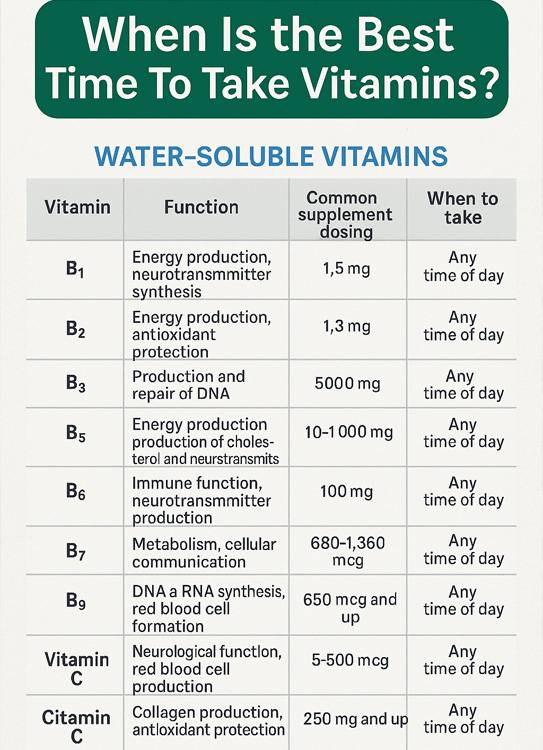 Note: Though morning is often preferred, there's no strong evidence that timing significantly alters effectiveness—consistency matters most.
Best time to take fat-soluble vitamins
Fat-soluble vitamins are stored in fat tissues and the liver, so they can build up over time—making correct dosing and timing crucial.
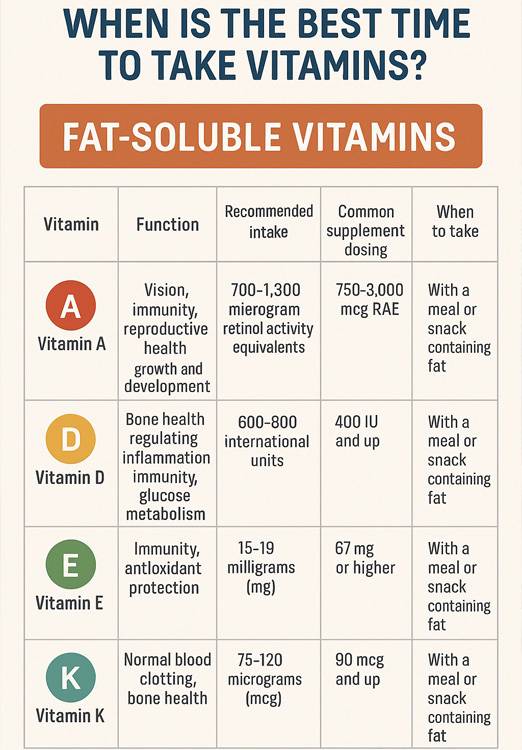
Caution: Overdosing on fat-soluble vitamins can lead to toxicity. Always follow your healthcare provider's recommendations.
Best Time to Take Iron, Magnesium & Omega-3s
Iron
- Function: Oxygen transport, hormone synthesis, energy
- Recommended Dose: 8–27 mg (varies by age, sex, pregnancy)
- When to take: On an empty stomach, 30 minutes before meals
- Avoid with: Calcium, caffeine, dairy, high-fiber foods, antacids
Tip: If iron upsets your stomach, take it with a small snack and vitamin C (like orange juice) to boost absorption.
Magnesium
- Function: Muscle, nerve, blood sugar, DNA synthesis
- Recommended dose: 310–420 mg/day
- When to take: Anytime. Bedtime may help improve sleep
- Best forms: Magnesium glycinate, citrate, malate
Omega-3s (DHA + EPA)
- Function: Heart, brain, inflammation regulation
- Recommended dose: Varies (commonly 180 mg EPA + 120 mg DHA)
- When to Take: With a fat-containing meal to reduce side effects and enhance absorption
Factors that influence vitamin absorption
- Fat-soluble vitamins absorb best with dietary fats.
- Iron is inhibited by calcium, fiber, and caffeine.
- Supplement form matters—e.g., magnesium glycinate absorbs better than magnesium oxide.
- Medical conditions like Crohn's and celiac disease can reduce nutrient absorption.
Quick tips for taking vitamins effectively
- ✅ Take fat-soluble vitamins (A, D, E, K) with meals containing healthy fats.
- ✅ Take water-soluble vitamins consistently, at a time that suits you.
- ✅ Avoid combining iron with calcium, dairy, or antacids.
- ✅ Consider taking magnesium at bedtime if you struggle with sleep.
- ✅ Use reminders or a pill organizer for daily consistency.
A quick review
The best time to take vitamins depends on their type:
- Water-soluble vitamins: Take any time, with food if needed for comfort.
- Fat-soluble vitamins: Take with a meal containing fat.
- Iron: Take on an empty stomach for best absorption.
- Magnesium & omega-3s: Take at a time that fits your routine, ideally with food for comfort.
Talk to your doctor first
Not everyone needs supplements. A healthcare provider can:
- Check your blood levels
- Assess your diet
- Recommend the correct supplements and dosing
- Prevent nutrient toxicity or interaction
FREQUENTLY ASKED QUESTIONS - FAQs
Should I take vitamins in the morning or at night?
It's generally best to take vitamins in the morning, especially B vitamins, as they can boost energy and may interfere with sleep if taken at night. However, fat-soluble vitamins (A, D, E, K) can be taken any time with a meal containing fat for better absorption.
Can I take all my vitamins at once?
While you can take most vitamins together, some combinations may reduce absorption or cause stomach upset. For example, calcium can interfere with iron absorption, so it's better to take them at different times. Always follow label instructions or consult a healthcare provider.
Is it better to take vitamins with food or on an empty stomach?
Most vitamins should be taken with food to improve absorption and prevent nausea. Fat-soluble vitamins (A, D, E, K) require dietary fat, while water-soluble vitamins (like C and B-complex) are usually well-tolerated with or without food but still benefit from food intake.
What’s the best way to take iron supplements?
Iron is best taken on an empty stomach with a source of vitamin C (like orange juice) to enhance absorption. Avoid taking it with calcium, dairy, tea, or coffee, as these can block iron absorption. If iron causes stomach upset, take it with a small amount of food.

Advertisement
E-PAPER
Trending
Popular
37 AKU researchers join world's top 2% scientists list for 2026
-
Could a heart calcium scan reveal your ...
01:36 PM, 13 Oct, 2026 -
One blood test, 50+ cancers: What the ...
05:27 PM, 12 Oct, 2026 -
WHO rules out weight-loss drugs for ...
04:38 PM, 9 Oct, 2026 -
Global life expectancy rebounds, but ...
03:17 PM, 5 Oct, 2026
Follow us on Facebook
Follow us on Twitter
Copyright ©2026 Medical News. All Rights Reserved.